
An analysis of loudness in Japanese YouTube videos
Published Updated
Contents
We analyzed the loudness of the YouTube video in Japan .
On YouTube, loudness normalization is introduced. Loudness normalization on YouTube lowers the volume of the video whose loudness is too high, but does not raise the volume of the movie whose loudness is too low.
If you have lots of videos with too little loudness on YouTube, you can increase the volume played on YouTube by raising the loudness to the extent that sound quality is not impaired.
Question
How much movie is too small loudness on YouTube?
As mentioned above.
Does the loudness drop if the YouTube video length is long?
As the length increases, the probability that the peak of the waveform will increase by chance will increase. If you use a limiter, you can suppress those peaks, but if you do not use a limiter, the loudness may decrease as the length increases.
From this, if you examine the relationship between length and loudness, it seems to be a material to judge whether the limiter is used or not. There are other factors related to length and loudness, so we can not make a judgment alone, but once we examine the relationship between length and loudness.
Analysis target video
A. Japan’s Top YouTuber
Almost all videos of “Hajime” channel
B. Japanese music channels
Almost all videos of “Lantis Channel” channel
C. Japanese TV station channel
Almost all videos of “AbemaTV Official YouTube” channel
* Videos before 2018/12/8
※ Because almost all of the movies have failed analysis
※ The video list is described in Appendix
Analysis index
loudness
It is an indicator of the loudness. Calculated with ITU-R BS.1770-3.
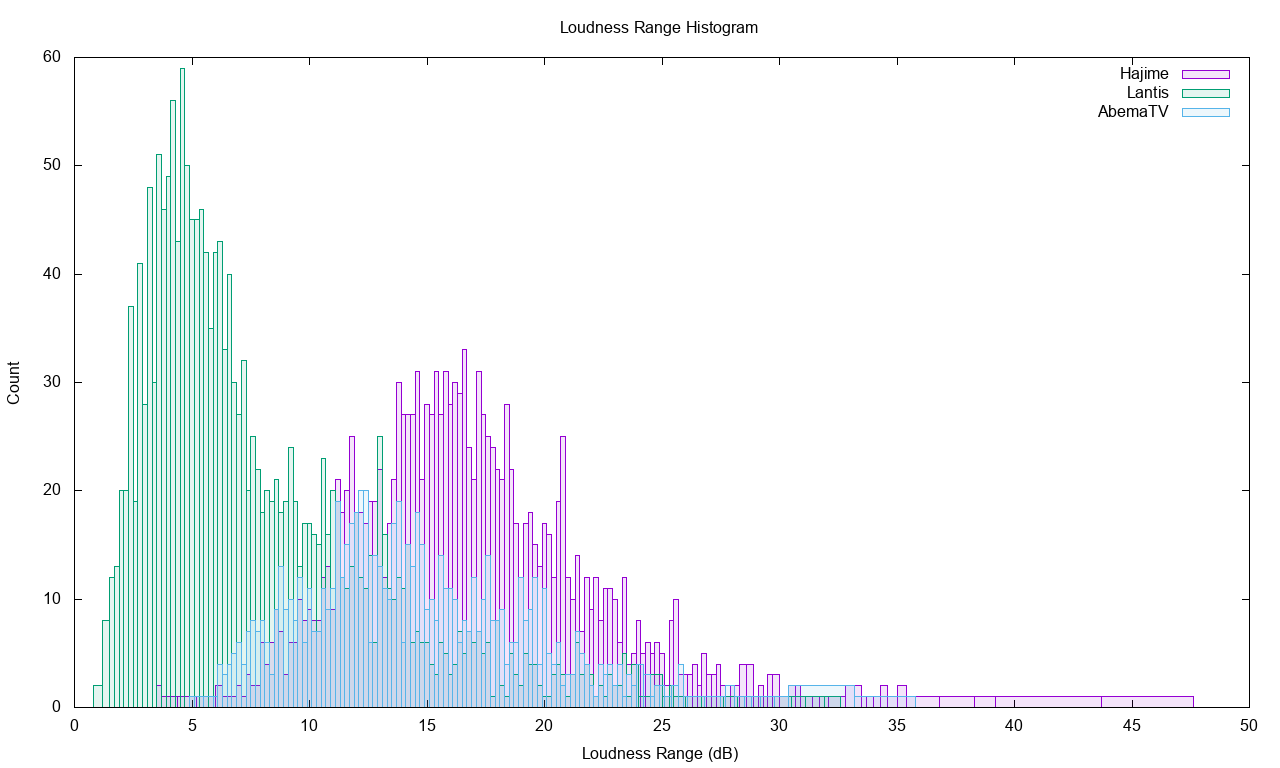
Loudness range
It is an indicator of dynamic range. We calculated and calculated the window length and overlap length of EBU TECH 3342. Window length 0.4 s, overlap length 0.3 s.
result of analysis
loudness
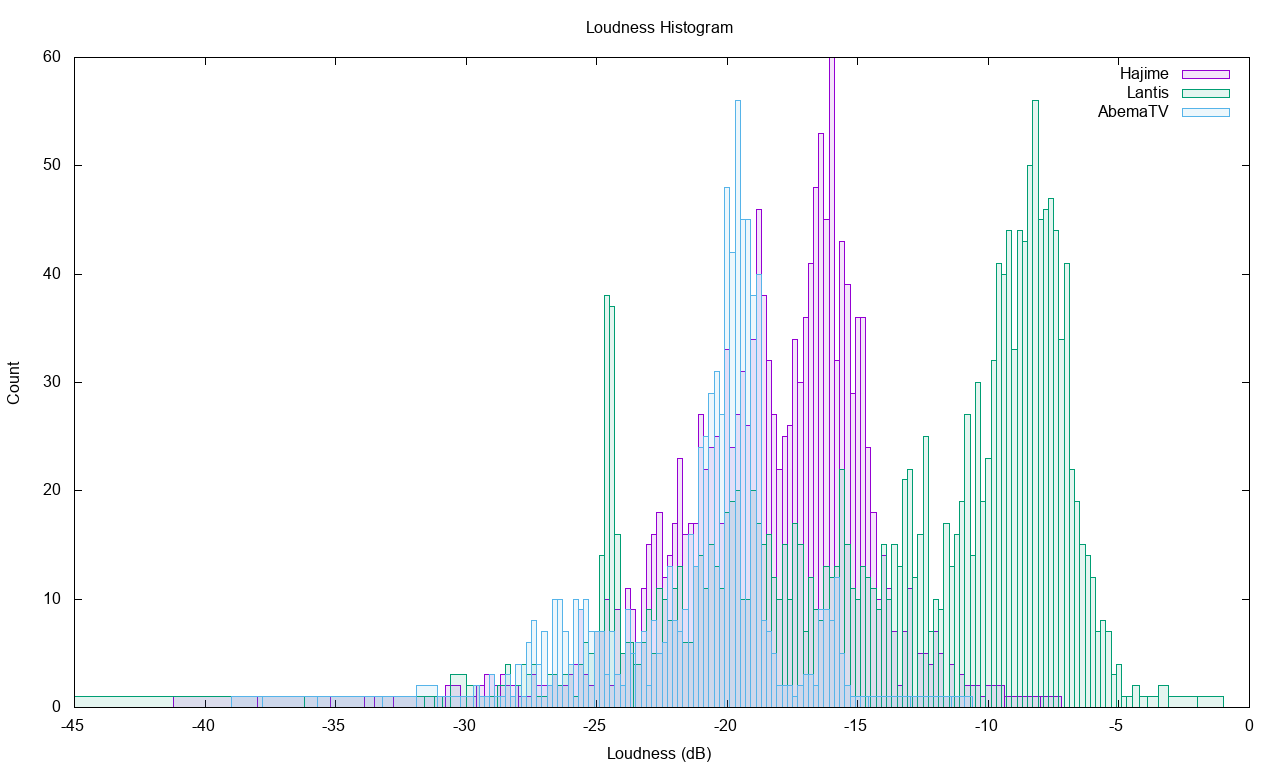
Loudness histogram
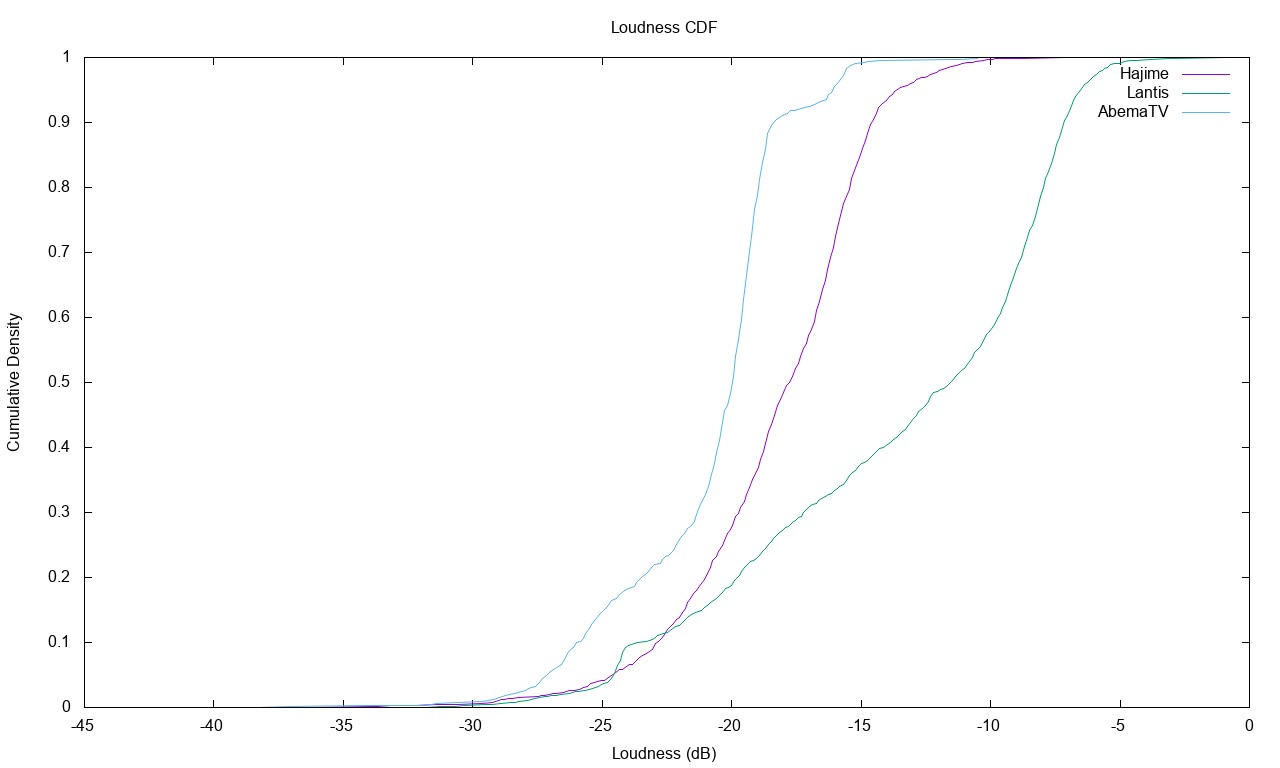
Loudness cumulative density distribution
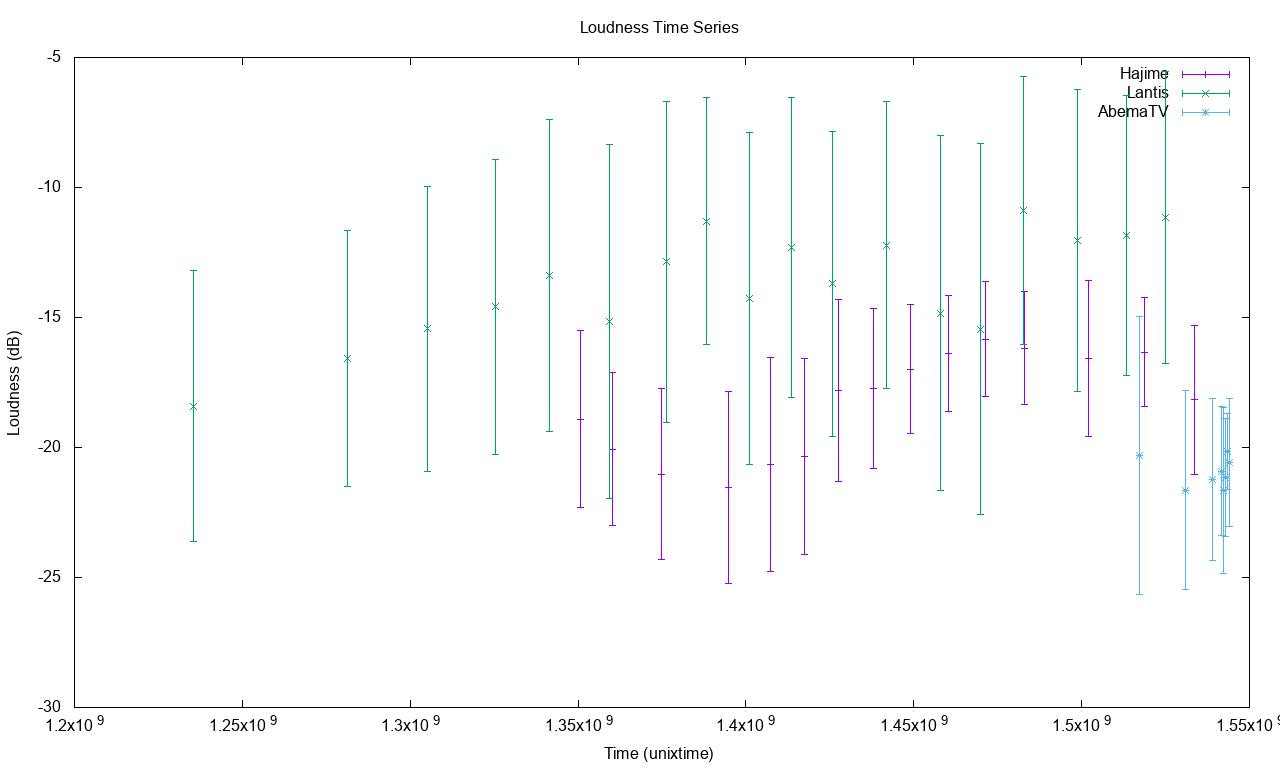
Loudness time series
Loudness range
Loudness range histogram
Loudness range cumulative density distribution
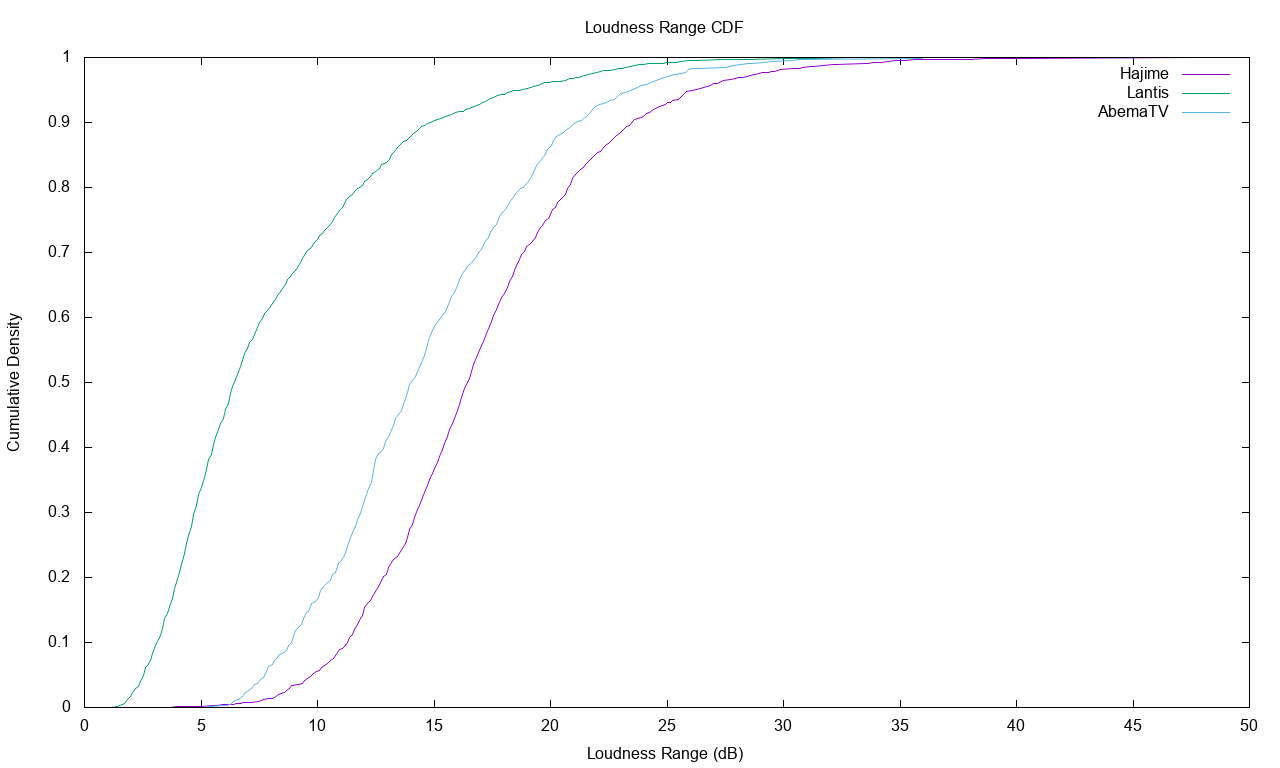
Loudness range time series
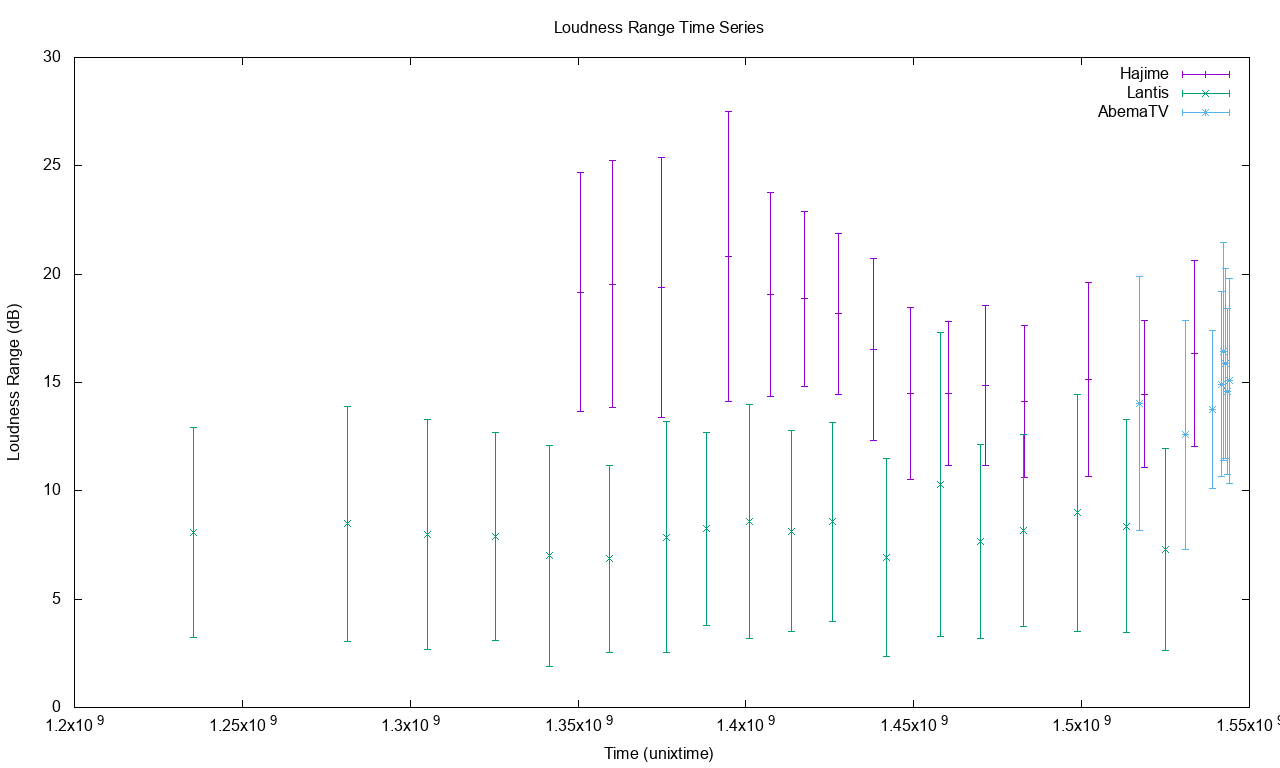
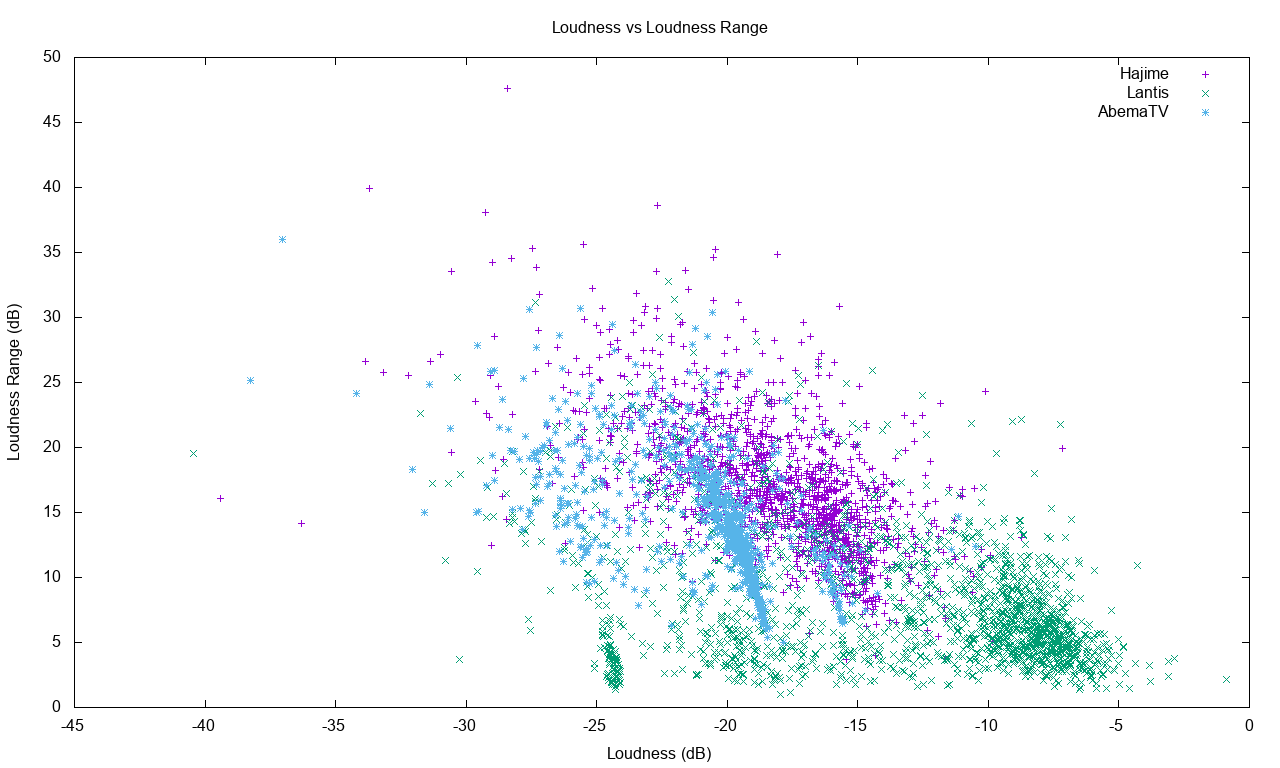
Relationship between loudness and loudness range
Loudness vs Loudness range scatter plot
Loudness vs. Loudness average and standard deviation
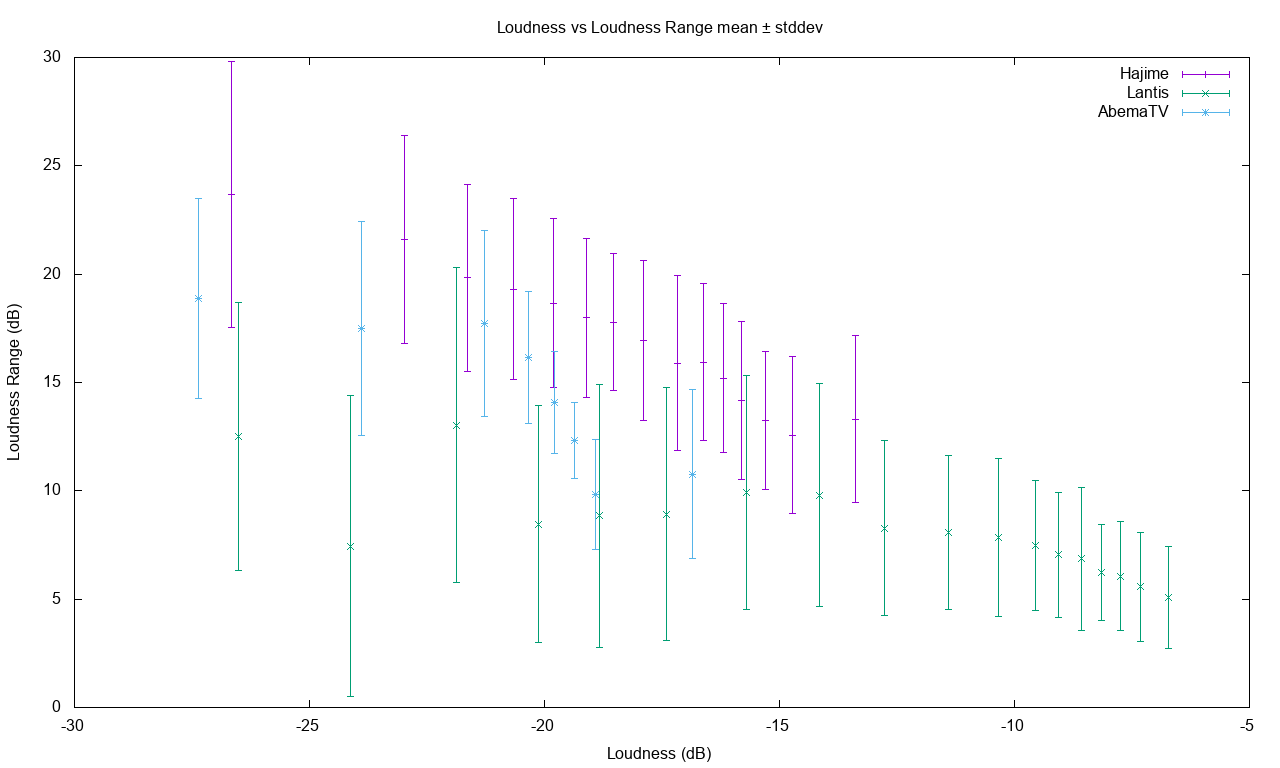
length
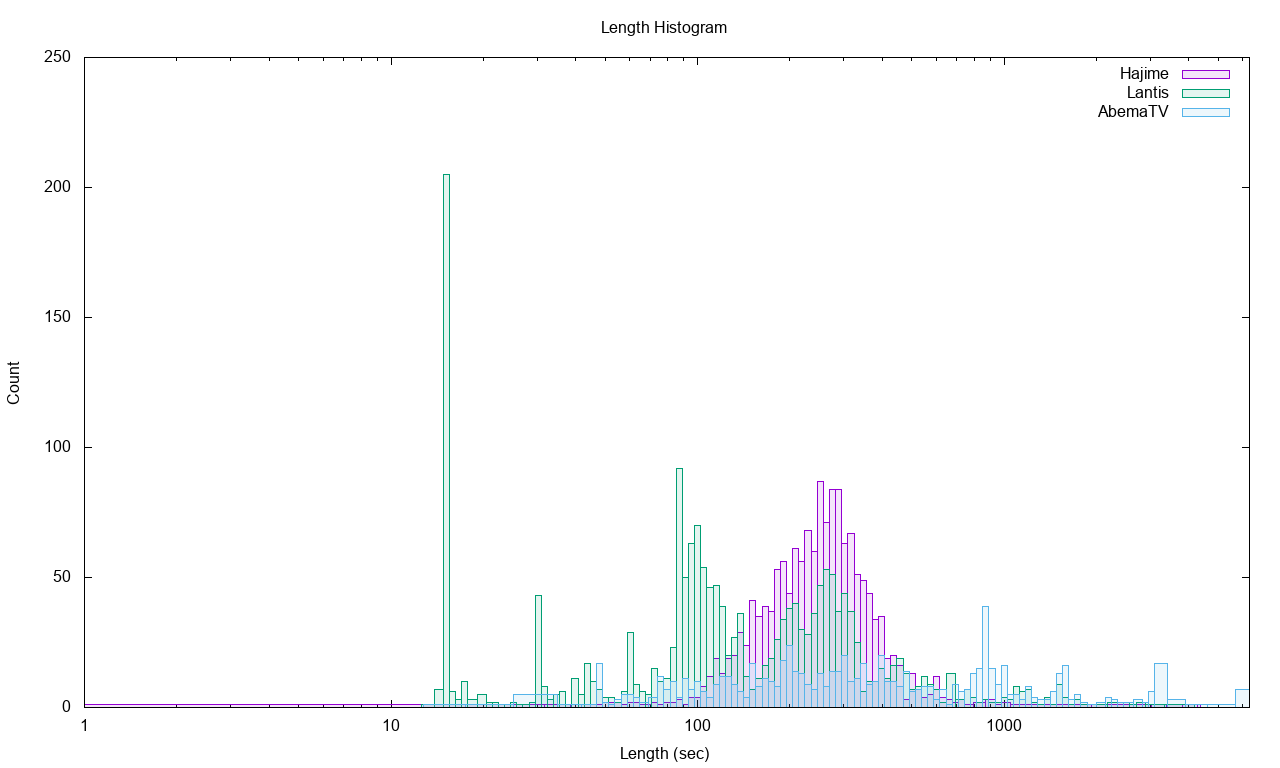
Length Histogram
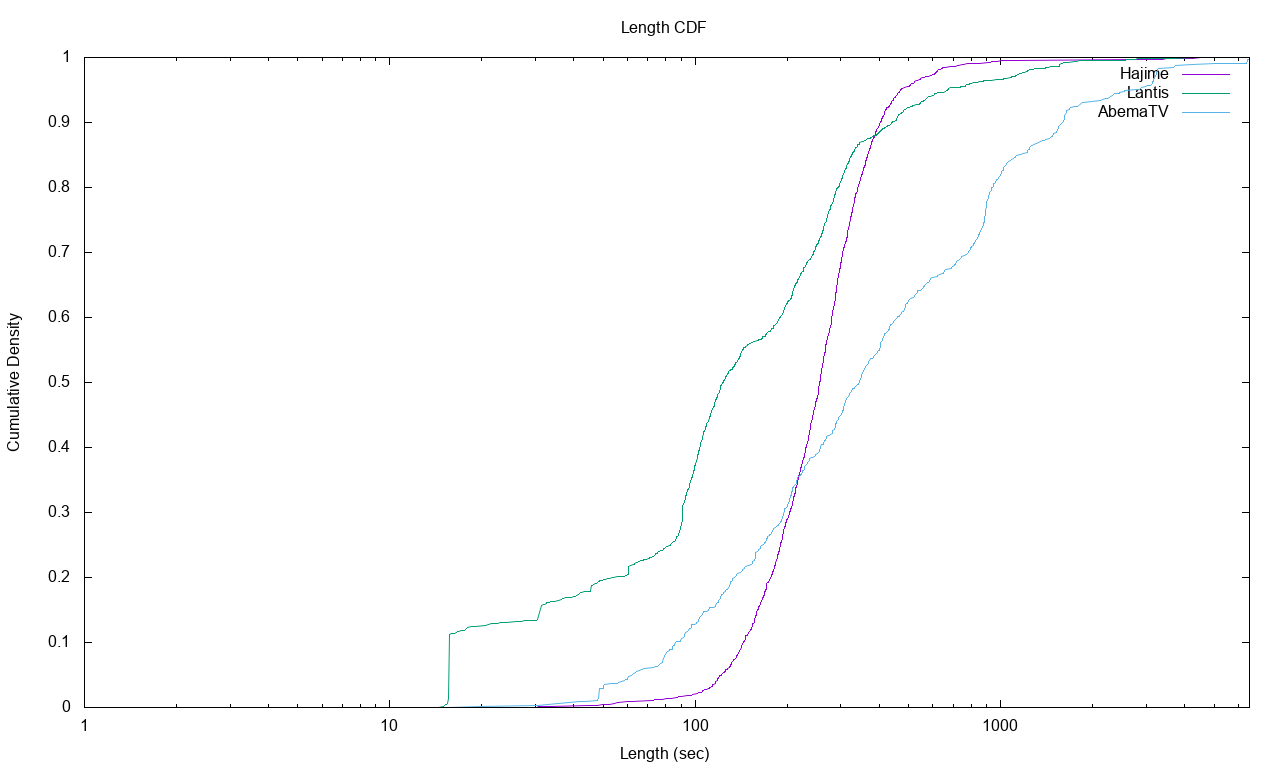
Length cumulative density distribution
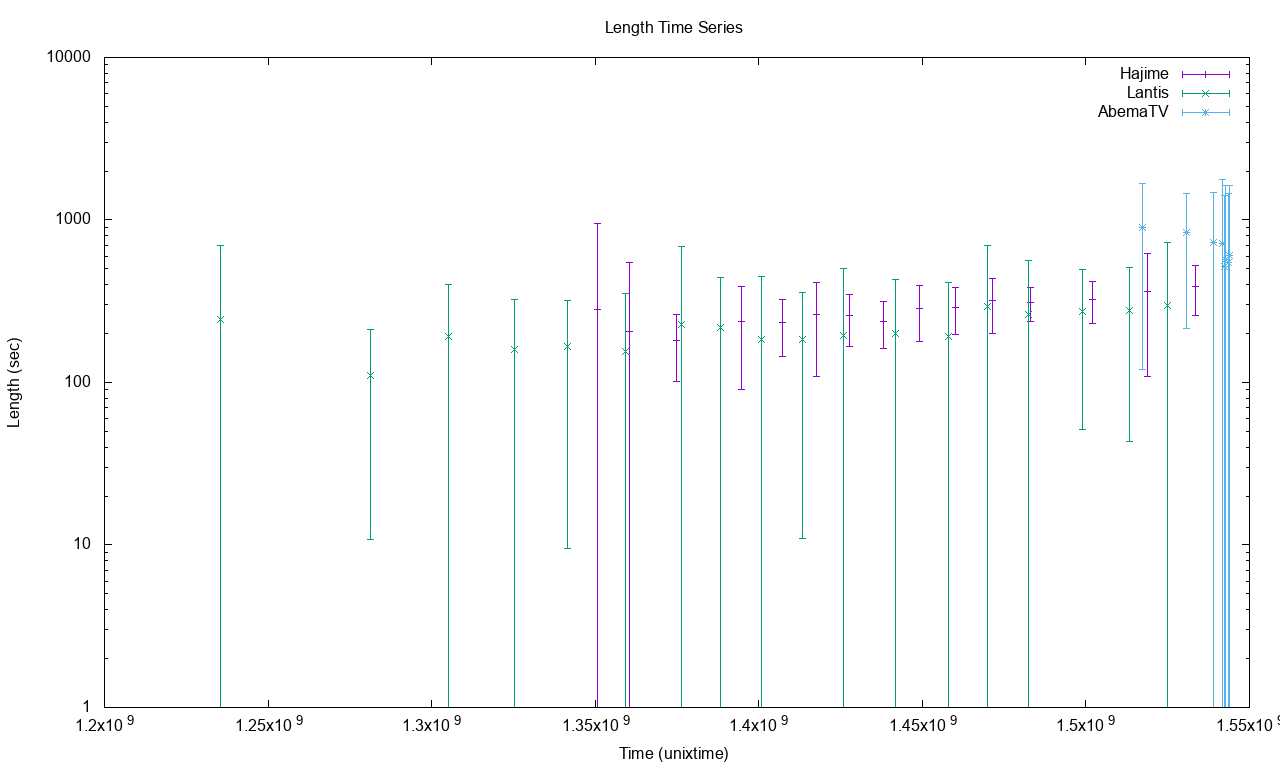
Length time series
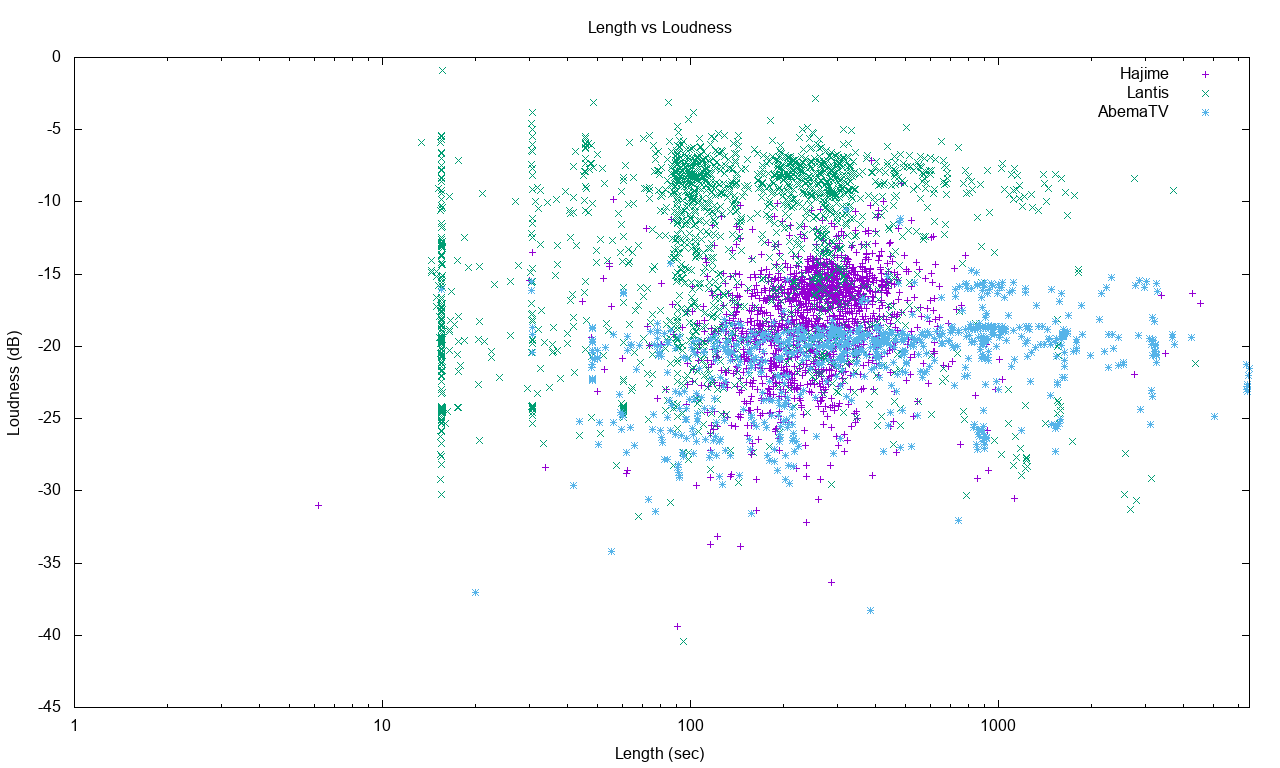
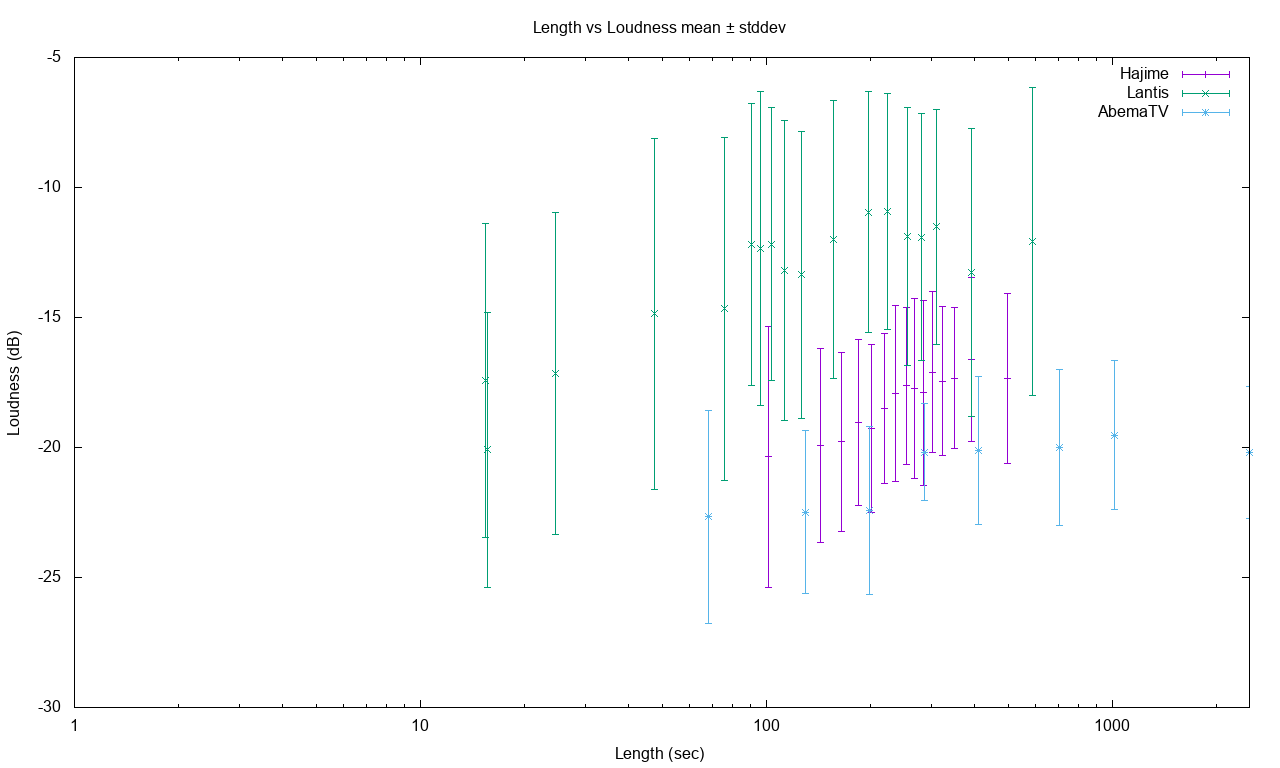
Relationship between length and loudness
Length vs Loudness Scatter plot
Length vs Loudness average and standard deviation
Consideration
How much movie is too small loudness on YouTube?
Looking at “Loudness cumulative density distribution”, except for “Lantis”, the loudness of 90% or more of the video is -14 dB or less.
Since the loudness calculation formula used this time is different from that of YouTube, I can not show the line that loudness normalization is applied any more, but as I think that -14 dB is sufficiently small as reference here , since loudness other than Lantis If you raise it, there seems to be a possibility that the volume at the time of playing on YouTube will rise.
Does the loudness drop if the YouTube video length is long?
According to “Loudness vs Length Average and Standard Deviation”, such a fact is unlikely.
Appendix
YouTube video analysis result in Japan (tsv)
Summary
I analyzed the loudness of the YouTube video in Japan.