
AI Mastering has been updated
Published Updated

Contents
I updated the AI Mastering.
we removed the one-touch mastering settings
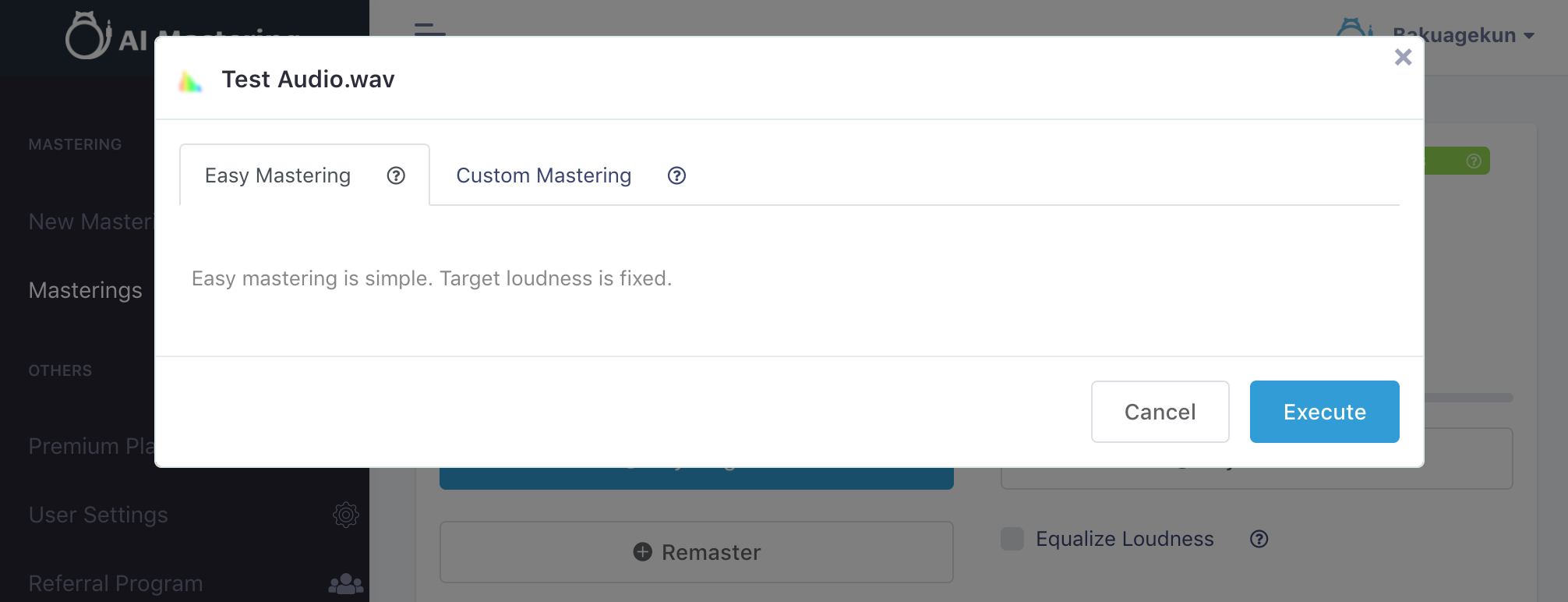
In order to make it easy to use AI Mastering, we removed the one-touch mastering settings. Please use custom mastering when you use the option to save bass and use movie title option.
Target loudness of one-touch mastering has been lowered
We reduced the target loudness of one-touch mastering to -9 dB so that you can master safely in a wide range of applications such as YouTube videos.
Those who ask for high loudness please use custom mastering.
We deleted less frequently used functions
Delete “Depth plus” function and “Lift up” function. Please let me know if you need to revive.
Integrated preset mastering into custom mastering
To simplify the UI, we integrated preset mastering into custom mastering.
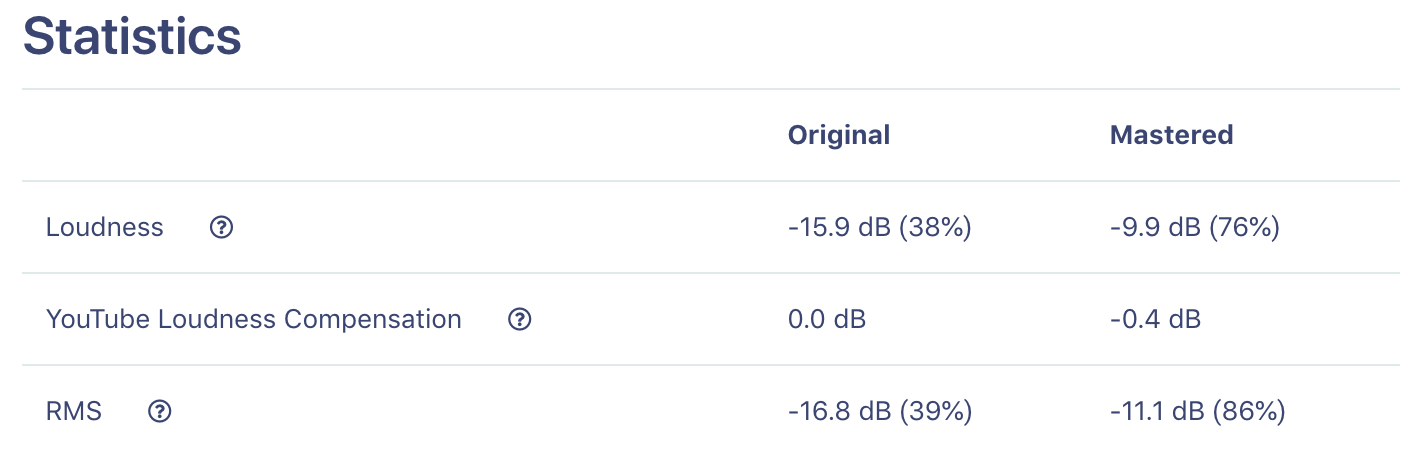
Added “YouTube Loudness Correction” indicator
The “YouTube Loudness Correction” metric is an estimate of how much loudness is compensated by loudness normalization when uploading to YouTube.
When uploading to YouTube it is good to avoid this value becoming too small.
We calculate based on the results of this survey .
Added “True peak” indicator
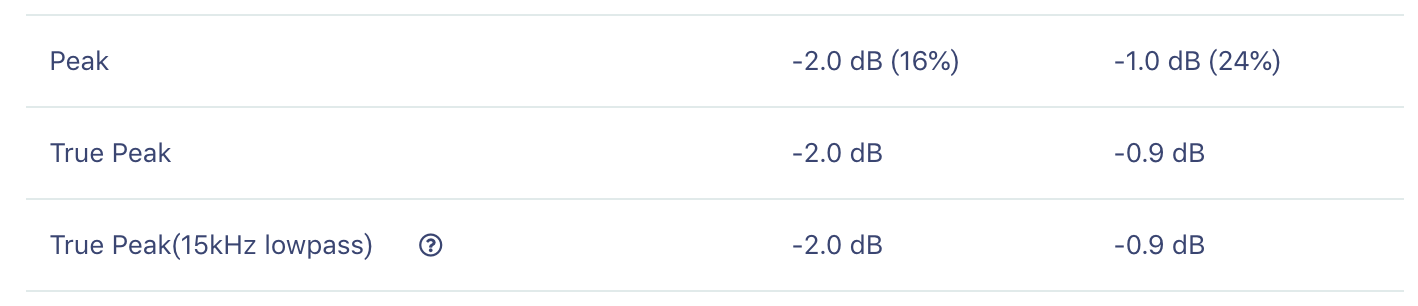
The “True Peak” index is the inter sample peak.
The “True peak (15 kHz low pass)” index is the inter sample peak of the waveform after applying a low pass filter of 15 kHz.
On some video platforms such as YouTube, uploaded videos are re-encoded. At that time the waveform changes. The big influence is the low pass filter applied when re-encoding.
According to here , the cutoff frequency of the low pass filter applied in YouTube re-encoding is 15.1 kHz, 15.8 kHz, 18 kHz, 20 kHz.
If the “True peak (15 kHz low pass)” index is less than 0 dBFS, there is less chance of clipping when uploading to YouTube.
I made it possible to have a head room at the peak
Until now, the peak of the audio after mastering was adjusted to 0 dBFS, but it is easy to clip when re-encoding the audio.
It was more convenient to handle the audio without worrying about clipping, so I made it a little room for the peak. Specifically, we set “True peak (15 kHz low pass)” to be less than -0.5 dBFS.